Non UK Regulated Casino sites operating under Curaçao Gaming Control Board and Malta Gaming Authority licenses offer UK players access to offshore gambling platforms in 2026, outside the UK Gambling Commission regulatory framework.
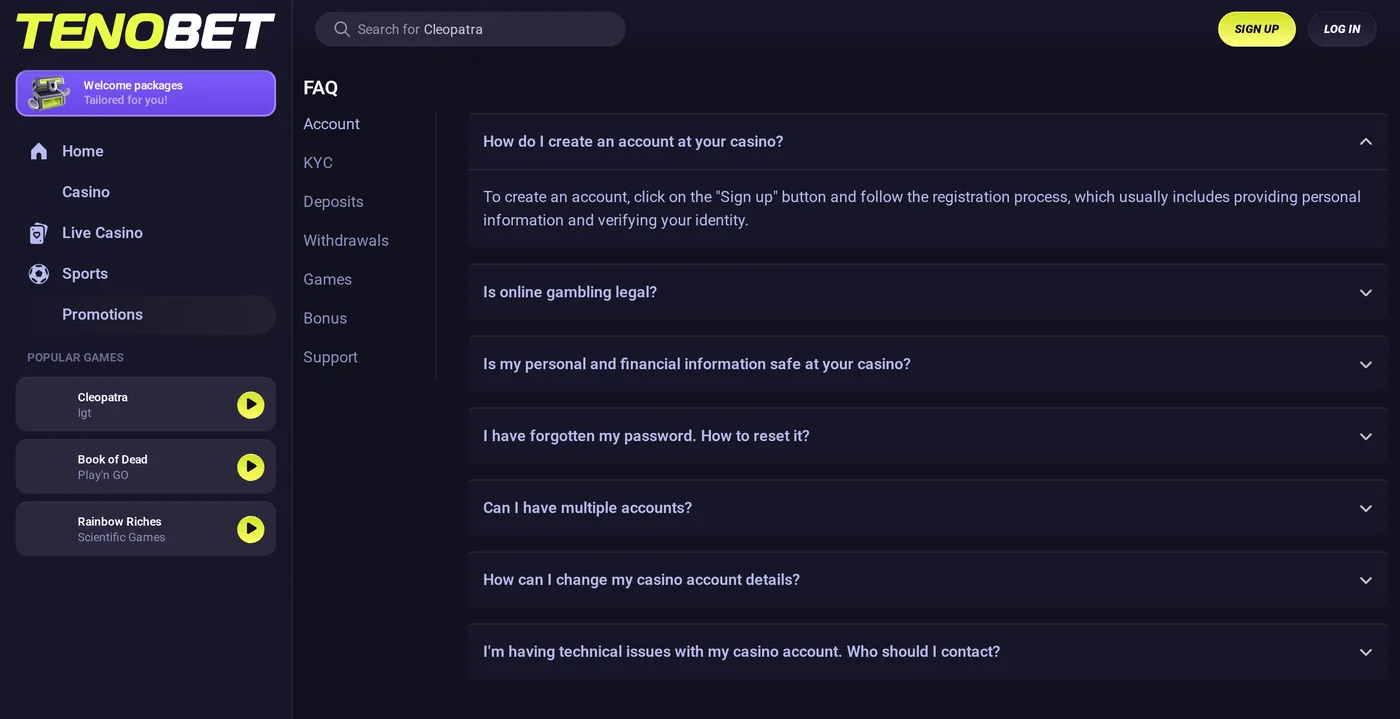
| Tenobet at a glance | Checked November 2026 |
|---|---|
| Operator | Tenobet.io, offshore licence (Curaçao / Anjouan references in the terms) |
| UK Gambling Commission | Not licensed; not on the public register |
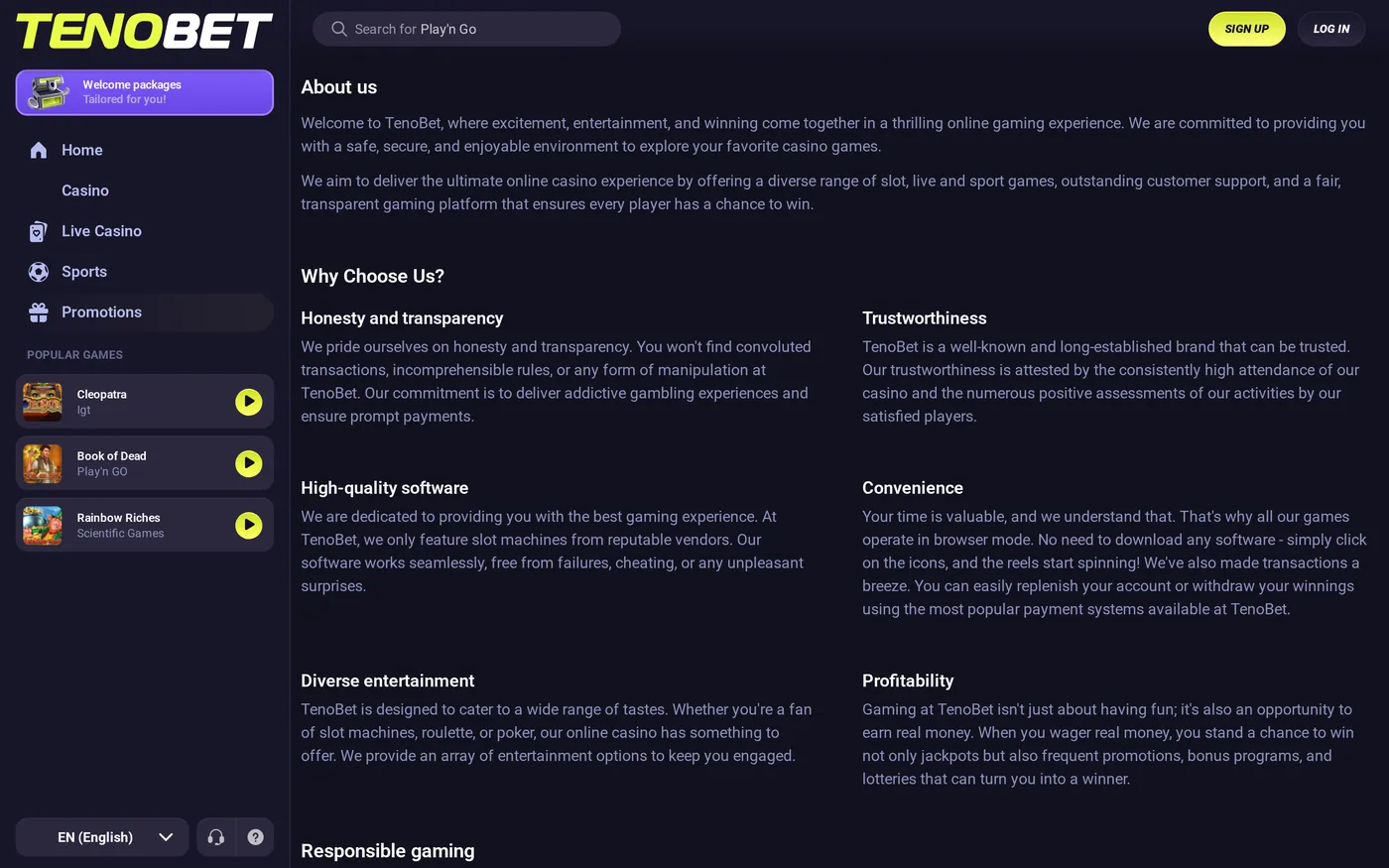
| GAMSTOP | Not connected |
| United Kingdom | Listed among restricted countries in the operator's terms |
| Casino welcome package | 400% up to €5,000 over three deposits (200% up to €500, 100% up to €1,500, 100% up to €3,000) |
| Sports welcome package | 300% up to €3,000 over three deposits; singles at odds of 2.0 or higher |
| Bonus rules | Max bet €2 with an active bonus; bonus winnings capped at 10× the bonus; wagering multiplier not published |
| Withdrawals | Usually up to 3 banking days; minimum €100; one request per 24 hours per method |
| Currency | Euro (EUR) |
| App | No App Store or Google Play app found; mobile browser site |
| Support | 24/7 live chat and e-mail |
3 Primary License Jurisdictions for Non-UK Casinos: Curaçao, Malta, and Gibraltar
Offshore casinos accepting UK players operate under licensing jurisdictions outside the UK Gambling Commission system, with Curaçao Gaming Control Board and Malta Gaming Authority serving as the primary regulatory authorities for operators in this sector. Each jurisdiction maintains distinct compliance frameworks affecting player protection standards and operator oversight levels for UK players accessing offshore platforms in 2026.
Malta Gaming Authority enforces comprehensive regulatory requirements approaching UKGC standards, including mandatory financial audits, game fairness certification, segregated player fund accounts, and formal dispute resolution mechanisms. Curaçao Gaming Control Board operates a streamlined licensing framework with moderate application requirements and lighter ongoing supervision, offering operators greater operational flexibility with reduced regulatory burden.
| Jurisdiction | Regulator | Application Strictness | Ongoing Compliance | UK Player Protections |
|---|---|---|---|---|
| Malta | Malta Gaming Authority (MGA) | High — financial review, game testing | Monthly reporting, regular audits | Segregated funds, ADR access, complaint escalation |
| Curaçao | Curaçao Gaming Control Board | Moderate — corporate verification | Annual renewal, lighter oversight | Basic dispute resolution options available |
Operators licensed under these offshore jurisdictions accept UK players without UKGC authorization, creating regulatory gaps where United Kingdom consumer protections mandated under domestic gambling law do not automatically apply. Player protection levels depend on the offshore regulator's enforcement standards and individual operator compliance practices rather than UKGC requirements.
The licensing choice affects practical player experience beyond protection mechanisms. Malta-licensed operators typically implement stricter verification procedures, detailed transaction records, and formal complaint escalation processes. Curaçao-licensed platforms often feature faster registration processes and fewer documentation requirements, though this comes with reduced regulatory oversight and more limited recourse options for UK players experiencing disputes.
What Non-UK Regulation Means for GB Players
Non-UK regulated casinos operate under licensing authorities outside the UK Gambling Commission jurisdiction, including Curaçao Gaming Control Board, Malta Gaming Authority (MGA), and similar offshore regulators. These platforms hold valid gambling licenses from recognized jurisdictions but lack UKGC authorization required for operators specifically targeting the United Kingdom market.
UK players accessing offshore casinos from Curaçao, Malta, or other non-UKGC jurisdictions are not engaging in illegal activity. The legal distinction applies to operators: casinos actively marketing to UK residents require UKGC licensing, while offshore platforms accepting UK players without UK-specific promotion operate under their home jurisdiction's framework. Players can verify UKGC licensing status through the public register maintained by the UK Gambling Commission.
The practical implications center on regulatory protection gaps. Curaçao and Malta-licensed casinos follow their respective jurisdiction's standards for game fairness, fund security, and dispute resolution rather than UKGC mandates. Non UK Regulated Casino platforms from these jurisdictions may offer different bonus structures, stake limits, and withdrawal procedures, with player safeguards depending on offshore regulator enforcement rather than UK law.
GAMSTOP Coverage and Self-Exclusion at Offshore Casinos
GAMSTOP self-exclusion applies exclusively to UK Gambling Commission licensed operators, creating a regulatory gap where offshore casinos remain accessible to UK players enrolled in the national exclusion scheme. Players registered with GAMSTOP can access platforms licensed under Curaçao Gaming Control Board or Malta Gaming Authority without triggering the exclusion database, as these offshore regulators operate independent systems outside UKGC oversight.
Offshore casinos offer site-specific self-exclusion tools and deposit limits as responsible gambling measures, though these protections apply only to individual platforms rather than across the entire offshore sector. Players requiring comprehensive exclusion from all gambling platforms should utilize GAMSTOP for UKGC-licensed sites and contact GamCare for additional support resources. GamCare provides free confidential advice for individuals concerned about gambling behavior regardless of where they play.
Gambling is restricted to players aged 18 and over. UK players seeking responsible gambling support should access self-exclusion options, deposit limits, and session time controls available through both UKGC-licensed and offshore casino platforms, and contact GamCare for professional assistance when needed.
Key UKGC Rules That Offshore Casinos Skip in 2026
Offshore casinos operating under Curaçao Gaming Control Board or Malta Gaming Authority licenses are not bound by UK Gambling Commission regulatory requirements implemented for UK-facing operators. These regulatory differences affect bonus structures, payment methods, stake limits, and verification procedures available to UK players accessing offshore platforms in 2026.
Stake Limits and Bonus Caps
UKGC-licensed casinos enforce strict limits on online slot stakes and bonus values to reduce gambling-related harm among UK players. Offshore operators licensed under Curaçao Gaming Control Board or Malta Gaming Authority set their own stake and bonus parameters without UKGC restrictions. Tenobet does not ask for a promo code: the welcome package is chosen in the registration form, and a player can also decline any bonus. Non uk regulated casino no deposit bonus offers also appear at offshore platforms where promotional restrictions differ from UK standards.
Credit Card Deposits — Where the Ban Applies
The UKGC credit card deposit ban affects only UK Gambling Commission licensed operators. Offshore casinos continue accepting credit card transactions for non uk regulated casino deposit processing alongside alternative payment methods supporting GBP currency. Players preferring to avoid credit card gambling can use debit cards, e-wallets, or cryptocurrency options for deposits, while non uk regulated casino withdrawal procedures vary by platform and selected payment method.

Payment Methods for UK Players at Non-UK Casinos
Offshore casinos accepting UK players typically support GBP deposits and withdrawals alongside EUR and USD currency options, with payment method availability varying by licensing jurisdiction and individual platform policies. Visa and Mastercard remain widely accepted for non uk regulated casino deposit transactions at offshore platforms, where the UKGC credit card ban does not apply.
PayPal availability at offshore casinos is limited compared to UKGC-licensed sites, as the payment processor restricts gambling services based on licensing jurisdiction. UK players accessing offshore platforms commonly use Visa, Mastercard, e-wallets, and cryptocurrency options for deposits and withdrawals. Currency conversion fees apply when depositing GBP at casinos operating with EUR as base currency, with exchange rates determined by payment processors rather than casino operators.
| Method | Deposit Speed | Withdrawal Speed | GBP Acceptance | Notes |
|---|---|---|---|---|
| Visa | Instant | 1-5 business days | Yes | Available for non uk regulated casino deposit and non uk regulated casino withdrawal |
| Mastercard | Instant | 1-5 business days | Yes | Credit card deposits accepted at offshore sites |
| PayPal | Instant | 1-3 business days | Limited | Restricted at most offshore casinos |
| E-wallets | Instant | 1-2 business days | Yes | Skrill, Neteller widely accepted |
| Cryptocurrency | 10-60 minutes | 1-24 hours | Via conversion | Bitcoin, Ethereum options available |
Withdrawal processing times depend on verification status and selected payment method, with e-wallets typically offering faster processing than card withdrawals.
Bonuses at Non-UK Regulated Casinos — Higher Matches, Fewer Caps
Offshore casinos offer bonus structures outside UKGC regulatory limits, including non uk regulated casino welcome bonus packages with higher match percentages and larger free spins allocations than permitted at UK Gambling Commission licensed platforms. Non uk regulated casino no deposit bonus offers provide bonus funds or free spins without initial deposits, while non uk regulated casino promo code promotions unlock exclusive bonus terms for registered players.
Typical offshore bonus structures include welcome deposit matches ranging from 100% to 200%, non uk regulated casino free spins packages between 50 and 200 spins, and ongoing cashback promotions on net losses. Reload bonus offers apply to subsequent deposits beyond the initial welcome package, maintaining player incentives across multiple sessions.
Wagering requirements at offshore casinos commonly range between 35x and 50x for deposit bonuses, with lower requirements of 10x to 20x applying to free spins winnings. Higher headline bonus amounts at offshore platforms may carry stricter playthrough conditions compared to UKGC-regulated offers, requiring players to evaluate total wagering obligations rather than initial bonus value alone. Bonus terms vary significantly between operators licensed under Curaçao Gaming Control Board and Malta Gaming Authority frameworks.
Games and Software at Offshore Casinos
Offshore casinos licensed under Curaçao Gaming Control Board and Malta Gaming Authority frameworks offer casino games from the same software providers supplying UKGC-licensed platforms. UK players accessing offshore sites encounter familiar online slots, live casino tables, and traditional table games using identical software libraries available at UK Gambling Commission regulated casinos.
Game selection at offshore platforms typically includes several thousand slots titles, live dealer casino games streamed from professional studios, and virtual table games with RNG certification. Software providers supply their game portfolios to offshore operators alongside UKGC-licensed casinos, meaning the same slots titles, live casino variants, and table game options appear across both licensing frameworks.
Quality standards for casino games at offshore sites depend on individual provider certification practices rather than UKGC requirements. Reputable software developers maintain RNG testing and game fairness certification regardless of operator licensing jurisdiction, though verification standards vary between providers and testing laboratories.
Safety and Risks Outside UKGC Protection
UK players accessing offshore casinos operate outside the UK Gambling Commission consumer protection framework, including mandatory compensation schemes, UK-based dispute resolution services, and UKGC enforcement mechanisms. Offshore operators licensed under Curaçao Gaming Control Board, Malta Gaming Authority (MGA), or Gibraltar Regulatory Authority answer to their home jurisdiction regulators rather than the UKGC, creating gaps in player safeguards specific to United Kingdom gambling law.
Dispute Resolution When Something Goes Wrong
UK players experiencing disputes with offshore casinos must follow escalation procedures established by the operator's licensing jurisdiction rather than UKGC alternative dispute resolution processes. Initial complaints go to casino customer support, with unresolved issues escalated to the relevant license regulator—Curaçao Gaming Control Board for Curaçao-licensed operators, Malta Gaming Authority for MGA casinos, or Gibraltar Regulatory Authority for Gibraltar licenses. Enforcement effectiveness varies between jurisdictions, with Malta maintaining structured complaint procedures approaching UKGC standards while Curaçao offers more limited formal dispute mechanisms.
How to Verify an Offshore Casino License
Players can verify offshore casino licenses by checking the operator's license number against official regulator databases. Malta Gaming Authority maintains a public licensee registry at mga.org.mt, Gibraltar Regulatory Authority publishes licensed operators at gibraltar.gov.gi, and Curaçao Gaming Control Board consolidated previously separate sub-licenses under a unified system in 2024. License verification confirms regulatory authorization but does not guarantee individual operator reliability or service quality.
5 Non-UK Regulated Casinos Accepting UK Players in 2026
UK players accessing offshore casinos in 2026 commonly use platforms licensed under Curaçao Gaming Control Board jurisdiction, operating outside UK Gambling Commission and UKGC regulatory oversight. Five established offshore operators accepting UK players include MyStake, GoldenBet, DonBet, Rolletto, and Trixino, all holding Curaçao licenses and supporting GBP transactions.
| Casino | License | Payments | Games | GBP Support |
|---|---|---|---|---|
| MyStake | Curaçao Gaming Control Board | Visa, Mastercard, Crypto | Slots, Live Casino, Sports | Yes |
| GoldenBet | Curaçao Gaming Control Board | Visa, Mastercard, E-wallets | Slots, Table Games, Live Dealer | Yes |
| DonBet | Curaçao Gaming Control Board | Visa, Mastercard, Crypto | Slots, Live Casino, Virtual Sports | Yes |
| Rolletto | Curaçao Gaming Control Board | Visa, Mastercard, Crypto | Slots, Live Casino, Sports | Yes |
| Trixino | Curaçao Gaming Control Board | Visa, Mastercard, E-wallets | Slots, Table Games, Live Casino | Yes |
These offshore operators provide alternatives to UKGC-licensed platforms while maintaining Curaçao regulatory compliance. Malta Gaming Authority (MGA) and Malta-licensed casinos offer additional offshore options with stricter regulatory frameworks compared to Curaçao jurisdictions.
Frequently Asked Questions
Is it legal for UK players to use non-UK regulated casinos?
UK players accessing offshore casinos licensed under Curaçao Gaming Control Board or Malta Gaming Authority are not breaking United Kingdom law. Legal restrictions apply to operators targeting UK markets without UK Gambling Commission licenses, not to UK players using offshore platforms.
Frequently Asked Questions
What happens if I win a large amount at a non-UK regulated casino?
Large wins at offshore casinos trigger enhanced KYC verification procedures before withdrawal processing begins, requiring proof of identity, address verification, and potentially source of funds documentation. Offshore operators implement withdrawal limits per transaction, with higher wins processed across multiple installments over several business days. Verification timelines depend on the individual operator's compliance team capacity and the completeness of submitted documents, with Malta Gaming Authority licensed casinos typically maintaining more structured verification procedures compared to Curaçao Gaming Control Board platforms.
Who actually enforces the rules at non-UK regulated casinos?
Enforcement authority at offshore casinos rests with the licensing jurisdiction's regulator — Curaçao Gaming Control Board for Curaçao-licensed operators, Malta Gaming Authority for MGA casinos, or Gibraltar Regulatory Authority for Gibraltar licenses. The UK Gambling Commission has no enforcement jurisdiction over offshore operators accepting UK players, meaning player protection standards and complaint resolution procedures follow the offshore regulator's framework rather than UKGC requirements. Malta Gaming Authority maintains structured enforcement approaching UKGC standards with formal complaint procedures, while Curaçao Gaming Control Board operates with lighter ongoing supervision and more limited formal dispute mechanisms.
Can UK players use cryptocurrency at non-UK regulated casinos?
Most offshore casinos accepting UK players support cryptocurrency deposits and withdrawals including Bitcoin, Ethereum, and other digital currencies alongside traditional payment methods like Visa, Mastercard, and e-wallets. Cryptocurrency transactions at offshore platforms typically process faster than card withdrawals, with deposit confirmation times ranging from 10-60 minutes depending on blockchain network congestion and withdrawal processing completed within 1-24 hours after approval. UK players using cryptocurrency must account for GBP conversion at current exchange rates, as offshore casinos process crypto transactions in the digital currency's native denomination before converting to GBP display values where applicable.
How long does account verification take at offshore casinos?
Account verification at offshore casinos requires proof of identity documentation such as passport or driving license and address verification through utility bills or bank statements, with processing timelines varying by operator and licensing jurisdiction. Malta-licensed operators typically implement more thorough verification procedures compared to Curaçao-licensed platforms, reflecting the stricter compliance frameworks outlined in the license jurisdiction comparison. UK players can streamline verification by submitting clear, complete documentation immediately upon registration rather than waiting until the first withdrawal request, as enhanced verification checks on larger withdrawal amounts may extend processing timelines beyond standard account approval procedures.